Showing posts with label silver-resistance. Show all posts

Friday, April 1, 2016

Are the Cited Dangers of Colloidal Silver Real?

 Click here to learn how to make colloidal silver...
Not a week goes by that someone doesn’t pass along an article to me from an individual claiming in shrill tones that colloidal silver usage is egregiously dangerous.

Of course, there are some very real dangers to drinking excessively high dosages of colloidal silver on a regular basis for long periods of time, and I’ve covered those dangers many times in previous articles.

Plus, there’s a very tiny subset of people who appear to be allergic to silver, and therefore should not drink colloidal silver at all. 

But many of the most common claims being made against colloidal silver are either devoid of facts and documentation, or highly exaggerated, and appear to be specifically designed to scare people away from trying colloidal silver altogether. 

Here are my short answers to some of the most common of those claims, with links to additional information you can check for yourself…

Hi, Steve Barwick here, for The Silver Edge

An individual recently wrote that she was shocked to find so much information on the internet demonstrating how dangerous it is to use colloidal silver.

She cited claims that:
  • Colloidal silver interferes with the absorption of prescription drugs
  • The pathogen e. Coli is actually resistant to silver
  • Silver is toxic to normal human cells
  • Silver is harmful to human sperm, eggs and reproduction
  • Silver ingestion has been linked to birth defects
  • Finally, she stated that a search of the PubMed database showed no relevant information to silver’s supposed infection-fighting qualities 
Of course, as I’ve pointed out in the past, all of these claims are “talking points” regularly used by such anti-colloidal silver sources as WebMD.com, MayoClinic.com, the FDA, Quackwatch and other such organizations that frequently serve as apologists for Big Pharma.

And very few of those claims have any significant documentation, or are based solely on test tube studies rather than real-life studies.

So let’s take a look at each claim, one-by-one, and see what we can learn:

·       CLAIM:  Colloidal silver interferes with the absorption of prescription drugs

The idea that colloidal silver interferes with the absorption of certain prescription medications has been plastered all over the internet.

But the only documentation ever cited is an FDA bulletin which makes the same claim. 

So I filed a Freedom of Information Act request with the FDA, asking them to document the claim.  They could not.   

Rather than print all of the details here, you can learn more by reading my previous article, “FDA Admits:  No Proof Colloidal Silver Interferes With Drug Absorption.”

Nevertheless, if you’re on prescription drugs you should tell your doctor about all of your nutritional supplements, in case there’s anything (including colloidal silver) that might be contraindicated.   

·       CLAIM:  The pathogen e. Coli is actually resistant to silver

This claim is based on "iffy" research in which the laboratory medium used to grow the e. Coli bacteria contained specific chemicals known to bond to silver and reduce its effectiveness.

In other words, the studies were test tube studies, not human studies.  And the chemical broth used by researchers to grow the e. Coli bacteria for the study contained a variety of salts and other chemicals that are known to neutralize silver’s effectiveness. 

As a white paper published by the Immunogenic Research Foundation pointed out:
Another most common problem of these [test tube clinical studies] was the inadvertent culture contamination with various salts, something which will reduce silver efficacy.”

Researcher N. Grier, writing in the journal of Disinfection, Sterilization and Preservation way back in 1985, agrees with that assessment.  He pointed out in an article titled “Silver and Its Compounds” that:

Some so-called Ag+ resistant microorganisms may result from an apparent neutralization of the metal’s inhibitory action or other assay artifacts.

These include the presence of chelators such as serial amino acids, constituents of hard water, different buffers, light, incubation temperature, and particularly, soluble components of trypticase soy agar (TSA) and tryptose glucose extract agar (TGE).”

In short, the microbes being tested weren’t actually silver-resistant. The silver was simply robbed of its antimicrobial qualities before it could do its job.

What’s more, out of 20 recognized strains of e. Coli in existence, only a single sub-species of e. Coli was shown to be “silver-resistant” in the “iffy” study.

In the following article, Colloidal Silver and E. Coli,” I cite seven different clinical studies that have reached quite the opposite conclusion, demonstrating silver to be very effective against e. Coli, including drug-resistant strains of the pathogen!

·       CLAIM:  Silver is toxic to normal human cells

Over the past five years there have been a small handful of clinical studies purporting to demonstrate that “silver is toxic to human cells."

Once again, all of these studies have all been conducted in test tube environments, not in the human body.

So yes, with all of the body's protective mechanisms removed, you can indeed demonstrate silver is toxic to cells, especially if you saturate the cells in overly high concentrations of silver.

However, the same studies could have been conducted with orange juice, or coffee, or even with distilled water, and would have shown the same cell-damaging results.

Any time you put human cells in a test tube, and start adding substances with none of the body's protective mechanisms in place, you'll be able to show harm to the cells.  That’s what makes clinical studies like this so disingenuous. 

Another important factor: 

The vast majority of these "silver harms human cell" test tube studies were conducted using cancer cell lines.  Of course, researchers have known for decades that silver has a particular affinity for cancer cells, and easily kills them without harming normal, healthy human cells. 

So all the researchers actually demonstrated is that silver kills cancer cells.  They then extrapolated, without any documentation whatsoever, that this same toxicity applies to normal healthy human cells.  Once, again, this is extremely disingenuous.

Therefore, the conclusions of the researchers that silver "harms human cells" are essentially bogus.  To learn more, see, “Silver Nanoparticles Stop Cancer Without Toxic Harm.” 

Naturally, egregious misuse of any substance can cause harm to human cells.  But normal, responsible usage of colloidal silver has never been demonstrated to harm human cells. 

In fact, as far back as the 1970's and 80’s the late Dr. Robert O. Becker, M.D. conducted groundbreaking research at Syracuse Medical University using tiny, electrically generated, sub-microscopic silver particles. And in human trials he found absolutely no harm to cells or tissues.

Dr. Becker would later write: 

“What we have done was rediscover the fact that silver kills bacteria, a fact which had actually been known for centuries...

All of the organisms we tested were sensitive to the electrically generated silver ion, including some that were resistant to all known antibiotics

...In no case were any undesirable side effects of the silver treatment apparent.”

For additional information, see my previous article "Another Bogus Study Claims Nanosilver Harms Human Cells."

·       CLAIM:  Silver is harmful to human sperm, eggs and reproduction

Once again, this claim is also based solely on test tube studies in which human sperm or eggs were soaked in such high levels of colloidal silver the only way you could possibly get that much silver into ones testicles or ovaries would be to inject it. 

Unless one was drinking gallons of colloidal silver at a time (when a normal human dose is a teaspoon to an ounce or so) there would be zero chance of getting that much silver into one’s reproductive system.  

What’s more, the claim is contradicted by modern artificial insemination practices in which silver is actually used to preserve animal sperm and help keep it viable longer. 

And the claim is also contradicted by animal studies in which silver was used as a “stain” to track the development of animal embryos in real-time, while causing no harm to the developing embryos. 

For more detailed information, see my previous article “Is Colloidal Silver Toxic to Human Sperm or Eggs, or Harmful to Human Reproduction?

See also the very interesting article “A Tale of Two Pregnancies: Can Colloidal Silver Help Resolve Infertility?
  
·       CLAIM:  Silver ingestion has been linked to birth defects

The single "study" linking silver to birth defects wasn't a study on colloidal silver at all, but on drinking water from a local river source that had overly-high natural levels of silver.  

In the 1970’s, several women in Massachusetts had given birth to children with “fetal developmental anomalies of the ear, face, and neck.  Researchers tried to find out why this cluster of birth defects happened. 

They discovered low levels of silver in the local drinking water.  Silver levels were present at only 1/100th of the EPA standard.  Nevertheless, even with such low levels of silver in the drinking water, the researchers blamed the silver for the cluster of birth defects.

If you read the study itself, it's pretty "iffy."  And to the best of my knowledge, there's never been a corroborating study to back the original study up.

What's more, animal studies have shown no harm to the developing fetuses, even when silver was being intubated straight into the pregnant animals. According to the Environmental Protection Agency:

In a developmental toxicity study of pregnant rats conducted in 2002 by the National Toxicology Program (NTP), silver acetate was administered by gavage [tube-feeding – ED] on days 6-19 of gestation.

No developmental effects were reported at doses up to 100 mg/kg…

…More importantly, the results from this study did not demonstrate an increased susceptibility of offspring, nor did it demonstrate systemic toxicity.”

-- Environmental Protection Agency, Federal Register / Vol. 74, No. 110 / Wednesday, June 10, 2009 / Rules and Regulations

If you’d like to learn more, I discuss that lone "fetal birth defect" study in much more depth, in the article "Is It Safe to Take Colloidal Silver During Pregnancy?"

·       CLAIM:  No clinical evidence of silver’s supposed infection-fighting qualities.

The claim that there’s no body of medical literature demonstrating silver’s effectiveness against pathogens or illnesses is also bunk. 

Here's a link over 100 clinical studies demonstrating the effectiveness of silver against pathogens, infectious illnesses, cancer cells, and more.   

And here’s a link to an article documenting what top medical, scientific and clinical research experts have to say about colloidal silver. 

Additional Information

I could go on and on debunking the shrill online claims being made against colloidal silver by a small handful of organizations with ties to Big Pharma.

But anytime someone is determined to denigrate colloidal silver, they'll find some way to ignore the facts and continue repeating the discredited talking points.

You can learn more about colloidal silver safety in the following articles:


How to Make Your Own
Micro-Particle Colloidal Silver
 Click here to learn how to make colloidal silver...
Thankfully, today, high-quality colloidal silver – the world’s safest and most powerful natural germ-fighter -- is available in just about every well-stocked health food store in the United States. 

However, it’s often egregiously expensive, selling for as much as $20 to $30 for a tiny four-ounce bottle that might last a week at most. 

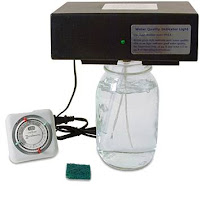
However, owning a Micro-Particle Colloidal Silver Generator from The Silver Edge allows you to make your own high-quality colloidal silver for less than 36 cents a quart.

Compared to health food store prices for colloidal silver, your very first one-quart batch of micro-particle colloidal silver actually pays for the entire cost the generator. 

Do you know of any other health product that literally pays for itself the very first time you use it?

Obviously, having the ability to make your own high-quality micro-particle colloidal silver for only a few pennies per quart is about as close as you’ll ever get to having "free" colloidal silver for the rest of your life, any time you or a family member, friend or loved one needs it. 

And because the silver particles produced by this amazing breakthrough in colloidal silver-making technology are as low as .8 nm – a fraction of a single nanometer – their effectiveness against colonies of pathogenic microbes is astonishing. 

Because of their extremely small size, the tiny, submicroscopic silver particles are up to 1,000 times more bioavailable than conventional silver particles.  This means the human body is able to absorb 99-100% of the silver, send it throughout the body to kill pathogens, and then excrete it with ease, afterwards.

Plus, it’s now known that these tiny silver micro-particles are able to kill off entire colonies of pathogens with far greater effectiveness than conventional colloidal silver particles, because of the “zombie effect” described in this recent article about brand new research out of Hebrew University in Jerusalem. 

Perhaps that’s why so many thousands upon thousands of people absolutely rave over the effectiveness of their homemade micro-particle colloidal silver, as you can see at this web page full of real-life colloidal silver success stories. 

Discover How Easy It Is…

If you’d like to learn more about making your own high-quality colloidal silver for just pennies per quart, you can…

  • Read how unbelievably simple it is to make your own high-quality colloidal silver for less than 36 cents a quart, here. 
  • Learn why the Micro-Particle Colloidal Silver Generator is the world’s #1 best-selling colloidal silver generator, here. 
  • Find out how to save a whopping $100 on a brand new Micro-Particle Colloidal Silver Generator, here. 
Meanwhile, I’ll be back next week with another great article on colloidal silver….

Yours for the safe, sane and responsible use of colloidal silver,


Helpful Links:
                                                                                                                                                
Important Note and Disclaimer:  The contents of this Ezine have not been evaluated by the Food and Drug Administration.  Information conveyed herein is from sources deemed to be accurate and reliable, but no guarantee can be made in regards to the accuracy and reliability thereof.  The author, Steve Barwick, is a natural health journalist with over 30 years of experience writing professionally about natural health topics.  He is not a doctor.  Therefore, nothing stated in this Ezine should be construed as prescriptive in nature, nor is any part of this Ezine meant to be considered a substitute for professional medical advice.  Nothing reported herein is intended to diagnose, treat, cure or prevent any disease.  The author is simply reporting in journalistic fashion what he has learned during the past 17 years of journalistic research into colloidal silver and its usage.  Therefore, the information and data presented should be considered for informational purposes only, and approached with caution.  Readers should verify for themselves, and to their own satisfaction, from other knowledgeable sources such as their doctor, the accuracy and reliability of all reports, ideas, conclusions, comments and opinions stated herein.  All important health care decisions should be made under the guidance and direction of a legitimate, knowledgeable and experienced health care professional.  Readers are solely responsible for their choices.  The author and publisher disclaim responsibility and/or liability for any loss or hardship that may be incurred as a result of the use or application of any information included in this Ezine. 

Copyright 2016 | Life & Health Research Group, LLC | PO Box 1239 | Peoria AZ 85380-1239 | All rights reserved.


Sunday, May 11, 2014

Colloidal Silver and Silver-Resistant Pathogens

 Learn more about the astonishing, infection-fighting qualities of colloidal silver at www.TheSilverEdge.com
Are some pathogenic microorganisms resistant to colloidal silver?
The answer is “yes” and “no.”  And it depends largely on who you’re listening to, and how their studies were conducted.   
Indeed, it turns out that many reported cases of bacterial resistance to silver have been either exaggerated, mistaken or based on poor study design by researchers.
Here’s the bare-bones truth no one else is telling you…
Hi, Steve Barwick here, for TheSilverEdge.com...
Some resources claim there are only eight pathogens that are resistant to the infection-fighting qualities of colloidal silver.  Others say there are 20. 
Actually, it’s a little more complex than that. 
There are over 20,000 catalogued pathogens in existence, and probably 20 million uncatalogued pathogens. 
So it’s quite inevitable that sooner or later you’ll run across a silver-resistant pathogen, which is to say, a pathogen that will not be killed by oral or topical use of colloidal silver. 
After all, colloidal silver is not “God.”  It’s just a natural substance that happens to have some very powerful antimicrobial and disinfectant properties.
Researchers claim antimicrobial silver is effective against over 650 different pathogenic microorganisms, whereas most traditional antibiotic drugs are effective against only several dozen pathogens, at best. 
So this certainly makes antimicrobial silver the most broad-spectrum of all natural infection-fighting agents.  But it cannot kill every single pathogen on the face of the earth.
The “complex” part is that while a certain species of pathogen might be quite susceptible to silver, a sub-species of that same pathogen might demonstrate at least some degree of resistance to silver.  
Partial Truths…
So, for example, you have some researchers claiming that the Enterobacteriaceae pathogen is silver-resistant.  (See “Colloidal Silver Medical Research Before 1940”)
But that’s only a partial truth, because it is only a sub-species of that family of pathogens that clinical studies have demonstrated to be silver-resistant. 
On the other hand, there are multiple other sub-species of Enterobacteriaceae that are very susceptible to the antimicrobial qualities of colloidal silver, including some of the antibiotic-resistant “superbug” forms.  (See “Colloidal Silver Versus Antibiotic-Resistant CRE Bacteria”)
There are also researchers who claim colloidal silver is ineffective against E. coli.  (See “Colloidal Silver Medical Research Before 1940”)
But this too is only a partial truth, because it’s only a sub-species of E. coli that’s been demonstrated in a handful of studies to be silver-resistant.
Indeed, many other strains of E. coli have been demonstrated to be very susceptible to the antimicrobial qualities of silver.  (See “Colloidal Silver and E. Coli” as well as “7 Deadly Microbes Killed by Colloidal Silver at Very Low Concentrations: Study”)
I’m not trying to complicate the issue; it just is what it is.
Just because a bacterium is said to be “silver-resistant” doesn’t mean every single member of that family of pathogens is silver-resistant.  It might only be a single sub-species that’s demonstrated silver-resistance, as in the above-mentioned cases.
When “Silver-Resistant” Pathogens Aren’t Really Resistant…
The situation gets even more confused, because some – and perhaps a majority -- of the research that’s ostensibly demonstrated silver-resistance in pathogens turns out to be misleading. 
In some cases, for example, researchers have labeled a certain pathogen as being “silver-resistant,” when in reality the pathogen was only resistant to the type of silver being used in the study. 
According to a clinical research white paper from the Immunogenic Research Foundation titled Microbial Multi-Drug Resistance (MDR) and Oligodynamic Silver:
“Over the past two decades, multiple studies with differing designs and speciations of silver-based drugs have indicated that certain bacterial species and strains have physiological mechanisms that circumnavigate silver’s toxicity.
These mechanisms are essentially plasmid based or chromosomal based; the later expressing as ATPase translocating mechanisms.
In neither case did investigators employ nanoscalar oligodynamic silver.  Instead, the experimental designs typically utilized silver salt compounds, which deliver poor amounts of bioactive silver.”
In short, in studies that supposedly demonstrated there to be silver-resistant pathogens, the type of silver used was typically a silver salt compound such as silver nitrate, rather than “nanoscalar oligodynamic silver,” meaning electrically-generated ionic silver with very small particle size. 
This is true as well of other silver compounds.  For example, at least one sub-species of the common Enterococcus pathogen is known to be resistant to silver sulfadiazine cream.  So you’ll find many clinical resources listing this pathogen as being “silver-resistant.” 
Yet other clinical researchers have found that the very same pathogen is killed quite easily by electrically-generated colloidal silver (i.e., ionic silver).
This makes sense, because the Enterococcus is a very hardy pathogen.  And silver sulfadiazine cream is designed to release a very slow trickle of silver ions to help keep microbial populations from spreading throughout burn wounds.
But Enterococcus is not easily affected by such a slow release of silver ions.  On the other hand, if you expose this same pathogen to higher quantities of silver ions by applying enough pure, unadulterated electrically-generated colloidal silver, it dies rapidly. 
That’s because electrically-generated colloidal silver is composed chiefly of pure silver ions.  And silver ions are the active, infection-fighting “specie” of silver
So “carpet bombing” a pathogen like Enterococcus with pure silver ions all at once, rather than exposing it to a very slow stream of silver ions being released from a silver compound like silver sulfadiazine (which you could think of as a weakened solution), does the trick. 
This means the pathogen is not silver-resistant at all.  It’s simply that the right “specie” of silver must be utilized, and the right dosage of silver must be utilized, if the pathogen is to be effectively killed.
Bacterial Culture Contamination
Another problem that’s confused the issue is when researchers neutralize silver’s antimicrobial qualities before the silver can kill the bacteria in a Petri dish.
This usually happens when the researchers grow the bacteria in a nutrient growth media containing substances such as strong salts, minerals, sugars, amino acids and proteins such as soy casein. 
When silver is applied to pathogens being grown in such laboratory nutrient media, these substances tend to bond strongly with silver and reduce its effectiveness. 
In essence, the researchers unwittingly dampen silver’s effectiveness without realizing it. They then conclude they’ve discovered another type of bacteria that’s become resistant to silver. 
But if the silver were to be applied to the very same pathogens outside of the presence of the artificial growth medium, it would easily destroy the pathogen.
As revealed in the clinical research white paper from the Immunogenic Research Foundation, Microbial Multi-Drug Resistance (MDR) and Oligodynamic Silver:
“Another most common problem of these experimental designs was the inadvertent culture contamination with various salts, something which will reduce silver efficacy.
The colloidal state and dynamics of living tissues is at odds with typical culture techniques and mediums, and brings about the unfortunately situation of requiring readers to compare apples to oranges.”
In other words, the nutrient growth media used in laboratories to grow bacterial colonies is quite different from living tissue. 
So all the researchers have actually demonstrated is that silver won’t work as well against the bacteria being tested when they’re grown in the laboratory in an artificial growth media that reduces silver’s effectiveness
Indeed, as far back as 1983, in a study titled Silver and Its Compounds (pg. 335; Disinfection, Sterilization and Preservation), a researcher named Grier demonstrated the fact that:
“Some so-called silver-resistant microorganisms may result from an apparent neutralization of the metal’s inhibitory action [by assay artifacts – ED]...
…these include the presence of chelators such as serial amino acids, constituents of hard water, different buffers, light, incubation temperature, and particularly, soluble components of soy agar (TSA) and tryptose glucose extract agar (TGE)”
Once again, in artificial laboratory growth media there can be components that neutralize silver’s antimicrobial qualities. 
On the other hand, in the human body there are transport mechanisms such as the  metalloprotein transport system that are specifically designed to “escort” silver intact through harsh chemical environments so it can do its work when it comes into contact with a colony of pathogens. 
According to the above-cited clinical research white paper, Microbial Multi-Drug Resistance (MDR) and Oligodynamic Silver:
“More specifically stated, the ‘apparent’ resistance of microbes to silver-based drugs is typically due to (1) an inadequate protocol or procedure, or (2) neglect of the necessary parameters so carefully reviewed by Goetz, Zhao and a NASA commissioned study.
 “Hamilton-Miller et al., have reported that bacterial strains completely resistant to the salt speciations of silver have proved erroneous when proper study designs were employed.”
In other words, when pathogens that had previously been demonstrated to be “silver-resistant” were instead raised in a growth medium that didn't neutralize silver, and when proper procedures were followed by the researchers, the supposed “silver resistance” suddenly vanished, and the pathogens were killed.  
In such cases, the supposed “silver resistance” of the pathogen was actually non-existent.
Dosage Also Matters
In other studies in which researchers claimed to have discovered silver-resistant pathogens, the dosage used in the study was simply not strong enough for that particular pathogen. 
Indeed, when later studies were conducted using stronger-than-average doses of silver, these same pathogens were either killed outright, or so badly disabled they could no longer create infection. 
In other words, in some cases the original researchers who claimed to have found “silver-resistance” in the pathogens simply hadn't used a strong enough dose to fully affect the pathogen. 
Finally, in some studies unusually weak forms of antimicrobial silver were used, when stronger forms were called for.  So killing the pathogens would simply have been a matter of switching to a more powerful form of silver.  But the researchers instead concluded that the pathogens had become “silver-resistant” when in fact they hadn't.
What this means is that of the very few instances of silver resistance on record, at least some of them – and perhaps a majority of them -- were not even true.
Additional Information…
Back in the 1980’s when researchers compiled the list of 109 pathogens and related medical conditions shown in the older medical literature (pre-1940’s) to be treatable with antimicrobial silver, they included a list of eight pathogens known to be silver-resistant. 
You can find that list of eight pathogens that are said to be silver-resistant in my article “Colloidal Silver Medical Research Before 1940”. 

Of course, that was previous to 1940.  And in truth, only certain sub-species of those eight pathogens have been demonstrated to be silver-resistant in clinical studies, and as I’ve pointed out above, some of those studies demonstrating “silver-resistance” are highly suspect, at best.
At this point in time (2014) there are now said to be some 20 different pathogens (out of the 20,000 catalogued pathogens) that have been demonstrated in clinical studies to “exhibit various degrees of resistance to the bactericidal effects of silver-based drugs.” 
But “various degrees of resistance” is not the same as actual silver-resistance.  It just means that in many cases, higher doses or stronger forms of silver would do the trick.
For a more complete overview of the issue of silver-resistant microbes – including a list of the 20 bacterial sub-species that are said to “exhibit various degrees of resistance to silver” -- you might want to read my earlier and much longer article “Can Pathogens Develop Resistance to Antimicrobial Silver?” at this link: 
Make Your Own High-Quality Colloidal Silver
Making your own high-quality, electrically-generated colloidal silver is one good way to make sure you have the most effective colloidal silver solution possible.
Many commercial brands of colloidal silver are adulterated; one study demonstrated that only about 43% of bottled colloidal silver products tested actually contained the concentration of microscopic silver particles listed on the label. 
Some colloidal silver products contained no silver particles at all!
In other cases, the silver particles in the commercial solutions have proven to be so large, they’re extremely difficult for the body to absorb, assimilate, distribute and afterwards excrete.
And in other cases, the potency of the colloidal silver solution has been demonstrated to be extremely weak because the solution had been sitting on store shelves for so long the silver particles were beginning to precipitate out of suspension and fall to the bottom of the bottle!
But when you make your own colloidal silver with a high-quality Micro-Particle Colloidal Silver Generator from TheSilverEdge.com:
·       You get fresh, pure batches every time!
·       You control the strength and potency!
·       You get uncommonly small, completely bioavailable silver particles as low as .8 nm -- a fraction of a single nanometer!
·       No hidden fillers, dyes, protein or gelatin coatings or other additives, just fresh, pure colloidal silver!
·       You get the superior ionic form of colloidal silver!
·       You can make it fresh, whenever you need it for maximum potency!
·       Your total cost is under 36 cents a quart, compared to health food store prices of up to $30 for a tiny, 4-ounce bottle!
To learn more about making and using colloidal silver with a high-quality Micro-Particle Colloidal Silver Generator, just click the link in this sentence.
Or watch some of the short colloidal silver videos at the link in this sentence. 
And don’t forget, I’ll be back next week with another eye-opening article on colloidal silver.  So be sure to stay tuned…
Yours for the safe, sane and responsible use of colloidal silver,


Helpful Links:
                                                                                                                                                 
Important Note and Disclaimer:  The contents of this Ezine have not been evaluated by the Food and Drug Administration.  Information conveyed herein is from sources deemed to be accurate and reliable, but no guarantee can be made in regards to the accuracy and reliability thereof.  The author, Steve Barwick, is a natural health journalist with over 30 years of experience writing professionally about natural health topics.  He is not a doctor.  Therefore, nothing stated in this Ezine should be construed as prescriptive in nature, nor is any part of this Ezine meant to be considered a substitute for professional medical advice.  Nothing reported herein is intended to diagnose, treat, cure or prevent any disease.  The author is simply reporting in journalistic fashion what he has learned during the past 17 years of journalistic research into colloidal silver and its usage.  Therefore, the information and data presented should be considered for informational purposes only, and approached with caution.  Readers should verify for themselves, and to their own satisfaction, from other knowledgeable sources such as their doctor, the accuracy and reliability of all reports, ideas, conclusions, comments and opinions stated herein.  All important health care decisions should be made under the guidance and direction of a legitimate, knowledgeable and experienced health care professional.  Readers are solely responsible for their choices.  The author and publisher disclaim responsibility and/or liability for any loss or hardship that may be incurred as a result of the use or application of any information included in this Ezine. 


Copyright 2012 | Life & Health Research Group, LLC | PO Box 1239 | Peoria AZ 85380-1239 | All rights reserved